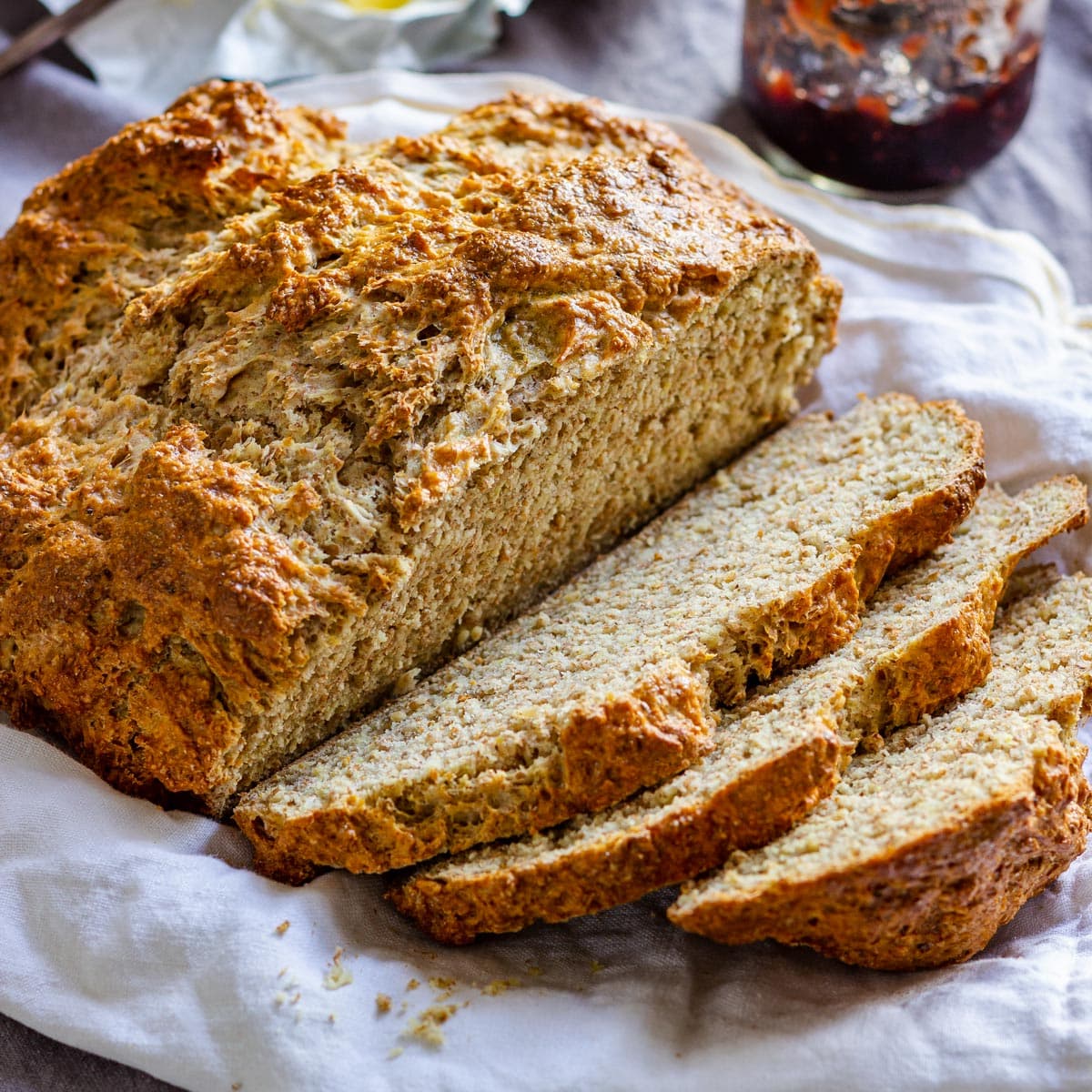
Irish Soda Bread, Gluten Free
A craggy, golden round with a crackling crust and a soft, tangy crumb studded with raisins. No yeast, no rising time — it goes from bowl to oven in about fifteen minutes.
Ingredients
Makes 1 round loaf (12 wedges)
Dough
Finishing
Instructions
- 1
Heat the oven
Set a rack in the center of the oven and heat it to 400°F (204°C). Line a rimmed baking sheet with parchment, or set out a 10-inch cast iron skillet. The skillet gives you a darker, crisper bottom crust; the sheet pan gives you a slightly wider, flatter loaf. Either works.
- 2
Whisk the dry ingredients
In a large bowl, whisk the gluten-free flour blend, xanthan gum, sugar, baking soda, salt, and caraway seeds (if using) for a good thirty seconds. Gluten-free blends are made of several starches that settle at different rates, so thorough whisking matters more here than it does with wheat flour. Skip the xanthan gum if your blend already lists it.
- 3
Cut in the butter
Add the cold cubed butter and work it into the flour with your fingertips, a pastry cutter, or two forks until the pieces are the size of small peas. The mixture will look dry and sandy — that's right. Stir in the raisins so they get coated and stay suspended in the dough.
- 4
Add the liquid
Whisk the buttermilk and egg together and pour them in all at once. Stir until no dry pockets remain. Gluten-free dough takes more liquid than wheat dough and will look wetter and looser at this stage, closer to a thick batter than a bread dough. Don't add flour to correct it.
- 5
Rest the dough
Cover the bowl and let the dough sit for 20 to 30 minutes. The starches and gum need this time to absorb the buttermilk — the dough will firm up noticeably and become scoopable rather than pourable. Skipping the rest is what produces a gritty, sandy crumb. The baking soda keeps working during this time, so don't stretch it past 30 minutes.
- 6
Shape and score
Scrape the dough onto the parchment or into the skillet and pat it into a round about 7 inches across with damp hands — wet fingers keep it from sticking without adding dry flour. With a sharp serrated knife, cut a cross 1/2 to 3/4 inch deep across the whole top, then brush with the tablespoon of buttermilk.
- 7
Bake
Bake for 50 to 60 minutes, until the crust is deep golden and firm. Gluten-free loaves need to go further than wheat ones: aim for 205 to 210°F (96 to 99°C) in the center, which is what fully sets the starches. Tent loosely with foil once the top is as dark as you want it.
- 8
Cool completely
Cool on a wire rack for a full hour before cutting — longer than you would for the wheat version. Gluten-free crumb firms up as it cools, and slicing early will give you a wet, pasty center even when the loaf is baked through.
You did it! Help us bring baking back home by selling your delicious baked goods on Homebaked!
Baker's Tips
- 1.
Buttermilk isn't optional in the way it looks — its acid is what reacts with the baking soda to lift the loaf. If you're out, stir 1 1/2 tablespoons of lemon juice or white vinegar into enough whole milk to reach 1 1/2 cups and let it sit for 10 minutes until it thickens slightly.
- 2.
Check the date on your baking soda. It's the only leavener in this bread, and a tired box means a squat, heavy loaf.
- 3.
Work fast once the buttermilk goes in. The rise starts the moment the acid meets the soda, and a dough that sits on the counter for twenty minutes before baking will have spent most of its lift.
- 4.
Scoring shallowly is the most common mistake. Cut deep enough that the cross stays open as it bakes — you should be able to see the cut widen within the first ten minutes in the oven.
- 5.
Swap the raisins for dried currants, chopped dried apricots, or leave them out entirely for a plainer, more savory loaf that's excellent with soup.
- 6.
This is a same-day bread by nature. Day-two slices are much better toasted and buttered than eaten plain.