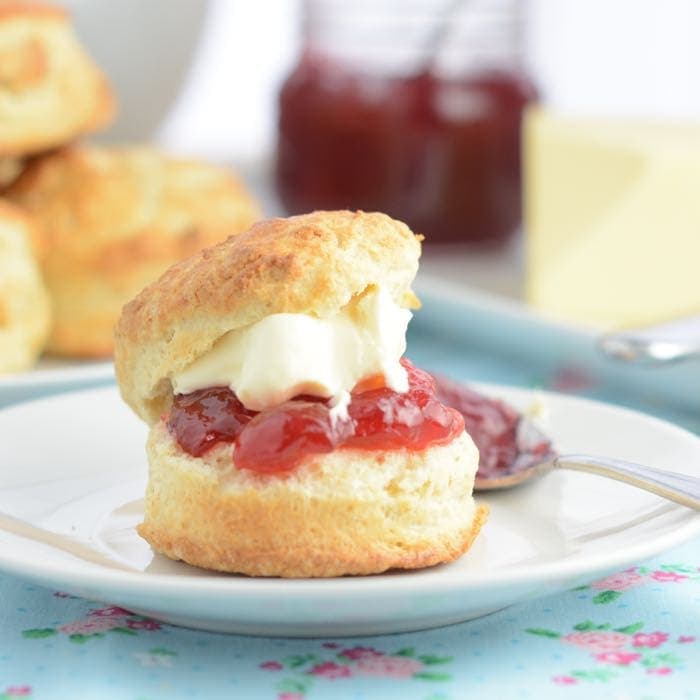
Classic Cream Tea Scones, Gluten Free
Tall, golden scones with a crisp top and a soft, steamy middle that pulls apart in two clean halves. Cold butter and a hot oven do almost all the work.
Ingredients
Makes 8 scones
Dough
Finishing
Instructions
- 1
Heat the oven
Set a rack in the upper third of the oven and heat to 425°F (220°C). Line a heavy baking sheet with parchment. A properly hot oven is what forces the water in the butter to flash into steam and shove the scones upward, so give it a full 20 minutes to come up to temperature.
- 2
Whisk the dry ingredients
In a large bowl, whisk the gluten-free flour blend, xanthan gum, sugar, baking powder, and salt together for a good 20 seconds. The extra xanthan gum goes in even if your blend already contains some; it thickens the dough enough to hold a tall shape and keeps the crumb from going sandy as it cools. Whisk thoroughly, because gum clumps are nearly impossible to break up later.
- 3
Cut in the butter
Scatter the cold butter cubes over the flour and toss to coat. Rub them between your fingertips, lifting your hands above the bowl so the mixture falls back in and stays cool. Stop when the largest pieces are the size of small peas and the rest looks like coarse meal. You want visible flecks of butter, not a uniform sandy texture, since those flecks are your flaky layers. If your kitchen is warm, use a pastry cutter or two knives instead of your hands.
- 4
Add the liquid
Stir the currants through the flour, if using. Beat the egg into the cold milk, pour it over the dry mixture all at once, and stir with a flexible spatula just until no dry flour remains. This dough is noticeably wetter and stickier than a wheat dough and that is correct, so do not be tempted to add flour.
- 5
Rest the dough to hydrate
Pat the dough into a rough slab right in the bowl, cover, and refrigerate for 30 minutes. Gluten-free starches and rice flours absorb liquid slowly, and this rest is what turns a sticky, gritty dough into a smooth one that cuts cleanly. Skip it and the scones bake up grainy. Do not stretch the rest much past 30 minutes, though, as the baking powder is already working and will lose lift the longer it sits.
- 6
Pat out the dough
Tip the rested dough onto a counter dusted with gluten-free flour and fold it over on itself three or four times. Pat it out by hand to a slab about 1 1/4 inches thick. Skip the rolling pin here, as it compresses the air pockets and gives you squat scones.
- 7
Cut without twisting
Dip a 2 1/2-inch round cutter in flour and press it straight down to the counter, then lift it straight up. Do not twist. Press the scraps together gently, pat out, and cut again. You should get 8. Arrange them about an inch apart on the lined sheet.
- 8
Chill, then glaze
Freeze the tray for 15 minutes until the dough is firm. Beat the remaining egg with the tablespoon of milk and brush the tops only, keeping it off the cut sides. Get them into the oven promptly once cut, rather than letting them sit out, so the leavening still has its full strength.
- 9
Bake
Bake for 17 to 20 minutes. Gluten-free scones need a few extra minutes and browning is a less reliable signal here, since these blends color faster than wheat flour. Trust firmness instead: the sides should be set and dry, and the center should read about 208°F (98°C).
- 10
Cool before splitting
Let these cool on a rack for a full 10 minutes before splitting. Gluten-free crumb is fragile while hot and sets as it cools, so a scone that seems gummy straight from the oven will be perfectly tender a few minutes later.
You did it! Help us bring baking back home by selling your delicious baked goods on Homebaked!
Baker's Tips
- 1.
Freeze your butter for 10 minutes and grate it on the large holes of a box grater if you find rubbing in fiddly. It distributes evenly and stays cold.
- 2.
Spoon flour into the measuring cup and level it off. Scooping straight from the bag packs in up to 20 percent extra and gives you dry, heavy scones.
- 3.
Crowding the scones about an inch apart is deliberate. They support each other as they climb and rise taller than scones spaced widely apart.
- 4.
Buttermilk works in place of the milk for a slight tang and softer crumb. Swap in an equal weight and reduce the baking powder to 2 teaspoons, adding 1/2 teaspoon baking soda.
- 5.
For savory scones, drop the sugar to 1 tablespoon and fold in 3/4 cup grated sharp cheddar with a good grind of black pepper.
- 6.
Unbaked cut scones freeze beautifully. Freeze solid on a tray, bag them, and bake straight from frozen with 3 to 4 minutes added.