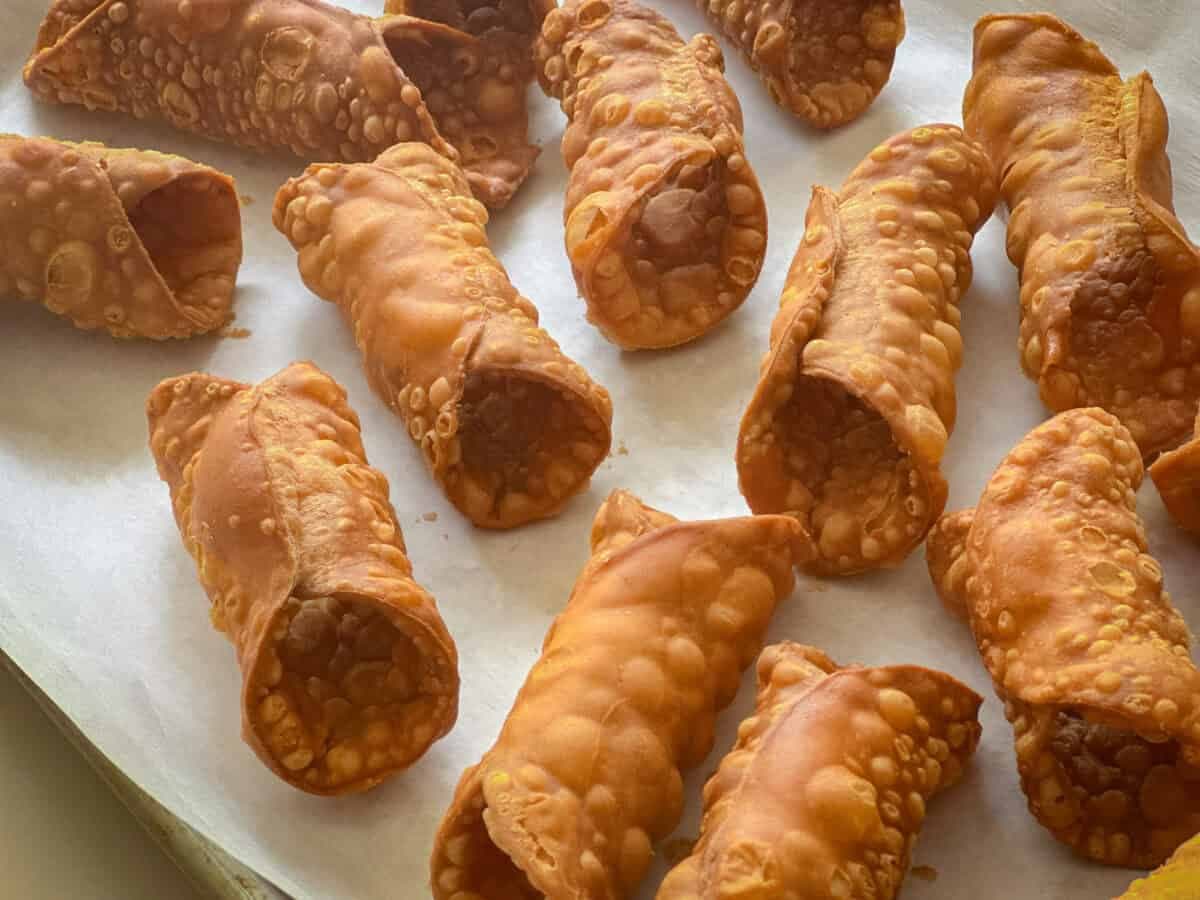
Crisp Blistered Cannoli Shells, Gluten Free
Thin, bubbled, shatteringly crisp fried shells with a whisper of Marsala, cocoa and cinnamon. Make them a day ahead and fill them at the very last minute.
Ingredients
Makes 16 shells
Dough
Shaping and Frying
Instructions
- 1
Build the dry mix
Whisk the gluten-free blend, xanthan gum, sugar, cocoa, cinnamon and salt together thoroughly. Gluten-free blends separate in the bag, so whisk for a good 30 seconds to distribute the starches and the gum evenly.
- 2
Rub in the fat
Scatter the cold cubed lard or butter over the dry mix and rub it in with your fingertips until the mixture resembles damp sand with no pieces larger than a lentil.
- 3
Bring the dough together
Beat the egg with the Marsala and vinegar and stir it into the bowl with a fork. This dough takes slightly more liquid than a wheat one because the starches are thirstier, so add Marsala a teaspoon at a time until no dry crumbs remain. Aim for a dough that is firm and cohesive but not sticky.
- 4
Press together and rest
There is no gluten to develop, so knead only until smooth, about 2 minutes, pressing rather than stretching. Wrap tightly and rest at room temperature for a full 30 minutes. This rest is non-negotiable here: it lets the starches and gum fully hydrate, and the dough goes from crumbly and crack-prone to pliable and rollable during that half hour.
- 5
Roll between parchment
Cut the dough into four pieces and keep three covered. Roll each piece between two sheets of parchment to about 1/16 inch, which keeps it from tearing or sticking without working in extra flour. Peel off the top sheet, brush with a thin film of egg white, fold in half, and roll thin again. If the edges crack as you roll, press them back together with a damp fingertip and carry on.
- 6
Cut and wrap the forms
Cut 4-inch rounds and stretch each gently into an oval. Lay a cannoli tube across the center, fold one edge over, brush with egg white, and lap the other edge on top. Press the seam firmly and hold for a few seconds, since gluten-free dough bonds less eagerly than wheat dough. Keep the shaped tubes covered so the surface doesn't dry and crack.
- 7
Heat the oil
Pour the oil into a deep heavy pot to a depth of at least 3 inches, clip on a thermometer, and bring it to 350°F. Set a wire rack nearby.
- 8
Fry in small batches
Fry two or three tubes at a time for about 2 minutes, a touch longer than wheat shells need, rolling them once. Go by sound and color rather than the clock: when the furious bubbling slows to a lazy sizzle and the shells are deep golden with blistered patches, they are set all the way through. Pulling them early leaves a soft, slightly pasty interior. Drain standing up on the wire rack.
- 9
Unmold and cool
Wait about a minute, then twist the tube free with a towel-wrapped hand. These shells are a little more brittle than wheat ones, so handle them gently. Cool completely before filling, and fill within 20 minutes of serving.
You did it! Help us bring baking back home by selling your delicious baked goods on Homebaked!
Baker's Tips
- 1.
Rolling thickness matters more than any other variable. A shell rolled to 1/8 inch comes out hard and bready; the same dough at 1/16 inch comes out glassy and light.
- 2.
Seal the seam with egg white, not water, and press only the overlap. A seam that pops open mid-fry usually means the dough was too dry or the press was too timid.
- 3.
Dry Marsala is traditional, but any dry white wine works. The acid tenderizes the dough and the alcohol flashes off in the fryer, leaving aroma behind.
- 4.
Lard gives a cleaner snap and a subtler flavor than butter, both in the dough and as a frying fat. If you've never tried it, fry one batch each way and taste them side by side.
- 5.
Re-rolled scraps make tougher shells. Knead them back together, let them rest 15 minutes, and roll them last.
- 6.
If your shells come out smooth instead of blistered, your oil was likely too cool or the dough too thick. Fix the temperature first, then the thickness.