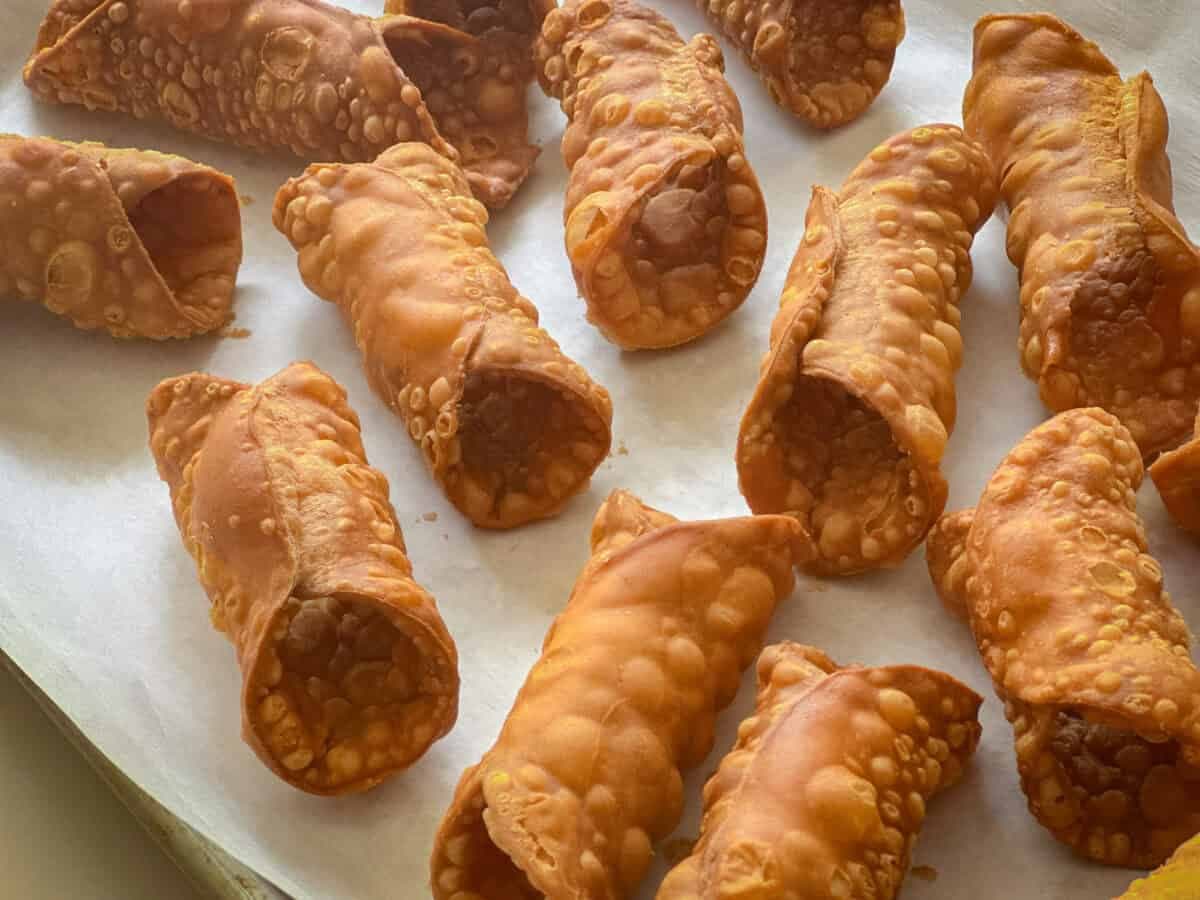
Crisp Blistered Cannoli Shells
Thin, bubbled, shatteringly crisp fried shells with a whisper of Marsala, cocoa and cinnamon. Make them a day ahead and fill them at the very last minute.
Ingredients
Makes 16 shells
Dough
Shaping and Frying
Instructions
- 1
Build the dry mix
Sift the flour, sugar, cocoa, cinnamon and salt into a roomy bowl. The cocoa is there for color and a faint bitterness that keeps the shell from tasting flatly sweet, so don't be tempted to leave it out.
- 2
Rub in the fat
Scatter the cold cubed lard or butter over the flour and rub it in with your fingertips until nothing larger than a lentil remains and the mixture feels like damp sand. Work quickly so the fat stays cold.
- 3
Bring the dough together
Beat the egg with the Marsala and vinegar, then pour it into the bowl and stir with a fork until the dough starts clumping. It should look shaggy and a little dry rather than tacky. If there are stubborn floury patches at the bottom of the bowl, add Marsala a teaspoon at a time until they come in.
- 4
Knead and rest
Turn the dough onto a clean counter and knead firmly for 6 to 8 minutes. This is a stiff dough and it will fight you at first, but it should finish smooth and elastic, like fresh pasta dough. Wrap it tightly and rest at room temperature for at least 1 hour, or refrigerate up to overnight. Skipping this rest is the single most common reason shells come out tough.
- 5
Roll it thin, then thinner
Cut the dough into four pieces and keep three covered. Roll the first piece as thin as you can, down to about 1/16 inch, so you can almost see your hand through it. If you have a pasta machine, run it down to the second-thinnest setting. Brush the sheet with a very thin film of egg white, fold it in half, and roll it out thin again. That trapped layer is what gives you the big blisters.
- 6
Cut and wrap the forms
Cut 4-inch rounds, then stretch each one gently into a slight oval. Lay a cannoli tube across the center, fold one long edge over it, brush that edge with egg white, and lap the opposite edge over to seal. Press firmly on the seam only, leaving the rest of the dough loose around the tube so it can puff. Keep the shaped tubes covered while you work through the rest of the dough.
- 7
Heat the oil
Pour the oil into a deep heavy pot to a depth of at least 3 inches and clip on a thermometer. Bring it to 350°F and hold it there. Below about 340°F the shells drink oil and turn greasy and pale; above 360°F they darken before the inside has set. Set a wire rack nearby.
- 8
Fry in small batches
Lower two or three tubes into the oil at a time using tongs. They will bubble up almost immediately. Fry for 1 1/2 to 2 minutes, rolling them once, until the shells are deep golden and covered in blisters. Lift them out and stand them on the wire rack, never on paper towels, which trap steam and soften the shell. Let the oil climb back to 350°F before the next batch.
- 9
Unmold and cool
After about a minute, when the tubes are cool enough to handle with a towel, grip the shell gently and twist the tube free. Wipe and re-oil the tubes lightly before reusing. Cool the shells completely before filling, which should happen no more than 20 minutes before serving.
You did it! Help us bring baking back home by selling your delicious baked goods on Homebaked!
Baker's Tips
- 1.
Rolling thickness matters more than any other variable. A shell rolled to 1/8 inch comes out hard and bready; the same dough at 1/16 inch comes out glassy and light.
- 2.
Seal the seam with egg white, not water, and press only the overlap. A seam that pops open mid-fry usually means the dough was too dry or the press was too timid.
- 3.
Dry Marsala is traditional, but any dry white wine works. The acid tenderizes the dough and the alcohol flashes off in the fryer, leaving aroma behind.
- 4.
Lard gives a cleaner snap and a subtler flavor than butter, both in the dough and as a frying fat. If you've never tried it, fry one batch each way and taste them side by side.
- 5.
Re-rolled scraps make tougher shells. Knead them back together, let them rest 15 minutes, and roll them last.
- 6.
If your shells come out smooth instead of blistered, your oil was likely too cool or the dough too thick. Fix the temperature first, then the thickness.
Equipment
- Metal cannoli tubes (at least 6)
- Rolling pin or pasta machine
- 4-inch round cutter
- Deep heavy pot or Dutch oven
- Deep-fry thermometer
- Long tongs or a spider skimmer
- Wire cooling rack
- Pastry brush
Storage
Store unfilled shells in a single layer in an airtight container at room temperature for up to 3 days; never refrigerate them, as the humidity turns them leathery. If they soften, crisp them on a sheet pan in a 300°F oven for 4 to 5 minutes and cool completely. Unfried shaped tubes of dough can be frozen on a tray, bagged, and fried straight from frozen with an extra 30 seconds in the oil. Fill shells no more than 20 minutes before serving, since ricotta moisture softens them quickly.