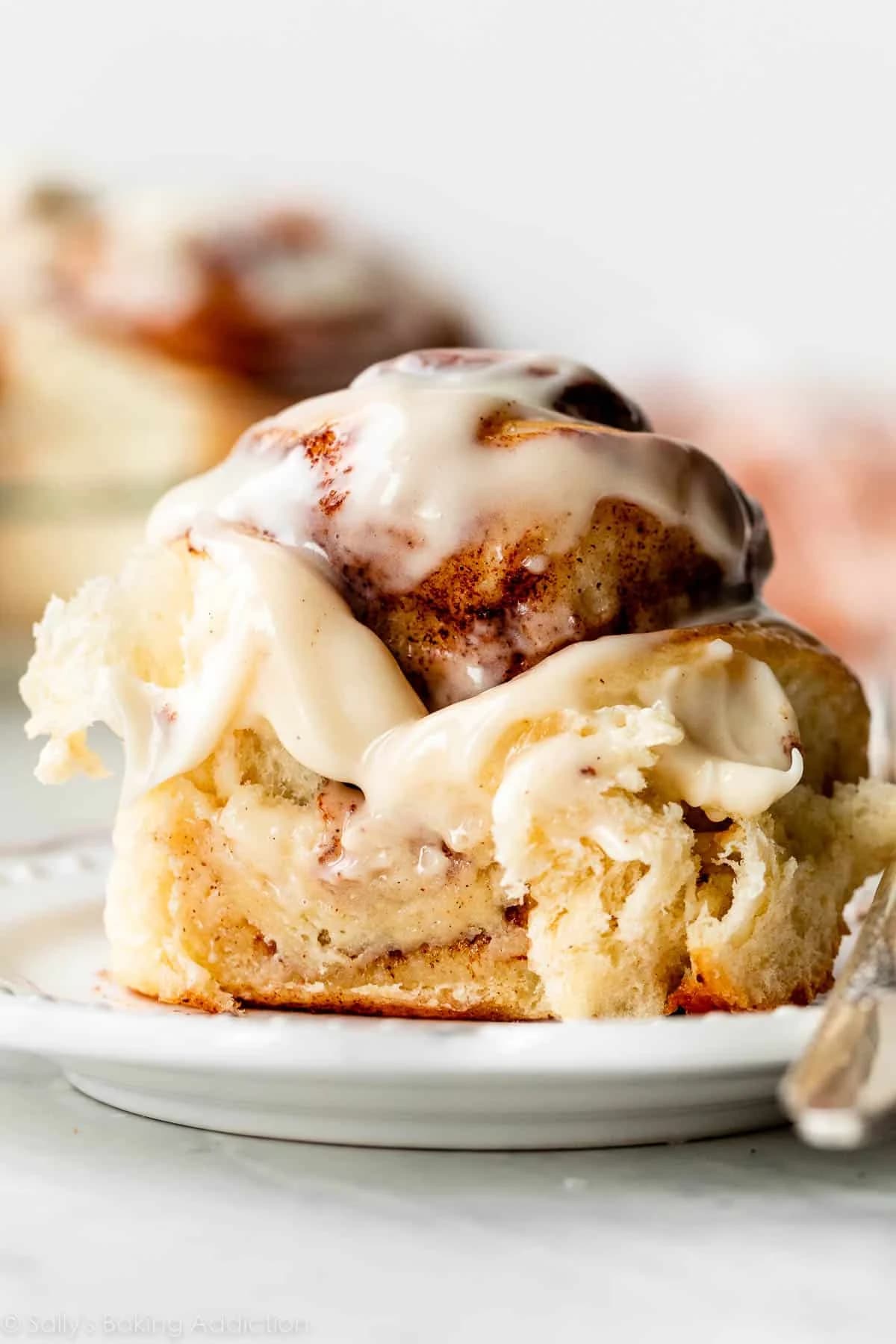
Soft Cinnamon Sweet Rolls, Gluten Free
Pillowy enriched yeast rolls with a buttery cinnamon swirl and a pour-over vanilla glaze. They pull apart in soft sheets and taste best still warm from the pan.
Ingredients
Makes 12 rolls
Dough
Cinnamon filling
Vanilla glaze
Instructions
- 1
Warm the milk and butter
Combine the milk and the 6 tablespoons of butter for the dough in a small saucepan over low heat. Warm just until the butter melts, then pull it off the heat and let it cool to 105-110°F. If you dip a finger in and it feels pleasantly warm rather than hot, you're there. Anything above about 120°F will start killing yeast, so give it the extra few minutes if you're unsure.
- 2
Mix the dough
In the bowl of a stand mixer fitted with the paddle attachment, whisk together the gluten-free flour blend, xanthan gum, baking powder, granulated sugar, yeast, and salt. Add the warm milk mixture, eggs, and vanilla, and beat on medium for 3 minutes. There's no gluten to develop here, so the paddle beats air and structure into the dough instead; a hook would just push it around. The dough will be thick, soft, and more like a stiff batter than a kneadable bread dough. Don't add extra flour to correct that.
- 3
Rest to hydrate
Scrape down the bowl, cover, and let the dough rest at room temperature for 25 minutes. This is the step that makes gluten-free rolls work: the starches and gums drink up the liquid, and the dough goes from sticky and slack to firm enough to roll. Skip it and you'll fight the dough at every turn.
- 4
Make the filling
Stir the softened butter, brown sugar, cinnamon, and salt together into a smooth, spreadable paste. It should look like wet sand that holds together when pressed. Butter a 9x13-inch pan while you're at it.
- 5
Roll and fill
Scrape the rested dough onto a large sheet of parchment, lay a second sheet on top, and roll it into a rectangle roughly 16 by 12 inches. Peel off the top sheet. If the surface cracks anywhere, dip your fingers in warm water and smooth the dough back together. Spread the filling to three edges, leaving a bare 1-inch strip along one long side.
- 6
Shape the rolls
Using the bottom parchment to lift and guide the dough, roll it up from the filled long edge into a snug log, peeling the paper back as you go. Pinch the seam closed. Cut into 12 equal pieces with unflavored dental floss, which handles this softer dough far better than a knife; slide it under the log, cross the ends over the top, and pull.
- 7
Rise
Arrange the rolls cut side up in the buttered pan with a little space between them. Cover loosely and let rise 50 to 70 minutes somewhere warm. Gluten-free rolls usually won't fully double. You're looking for visibly puffed, domed tops that have spread to just touch their neighbors. Heat the oven to 350°F near the end of the rise.
- 8
Bake
Bake on a center rack for 26 to 30 minutes, rotating the pan halfway through. Gluten-free dough needs a longer bake to drive off moisture and avoid a gummy center, so go by temperature rather than color: the middle rolls should read 205-210°F. Tent with foil if the tops darken before then.
- 9
Cool, then glaze
Whisk the powdered sugar, melted butter, milk, vanilla, and salt until smooth and pourable. Let these rolls cool for a full 20 minutes before glazing. Gluten-free crumb sets as it cools, and cutting into them too early makes them seem underbaked when they aren't. Pour the glaze over while they're still slightly warm and serve.
You did it! Help us bring baking back home by selling your delicious baked goods on Homebaked!
Baker's Tips
- 1.
Weigh your flour if you can. A cup scooped straight from the bag can run 30g heavy, and in an enriched dough that's the difference between pillowy and dense.
- 2.
Softened filling butter means softened, not melted. Melted butter runs out of the log during baking and leaves a hollow gap under the swirl.
- 3.
To bake these for breakfast, assemble through shaping, cover the pan tightly, and refrigerate overnight. Pull it out in the morning and let the rolls sit at room temperature 1 to 2 hours until puffy before baking.
- 4.
If your kitchen is cold, set the covered bowl in an oven that's off with just the light on. The ambient warmth is usually right around the 75-80°F sweet spot for rising.
- 5.
For a tangier finish, beat 4 ounces of softened cream cheese into the glaze and spread rather than pour it.
- 6.
Pull the rolls at the low end of the bake time if you plan to reheat them. They'll finish setting from residual heat and stay softer on day two.