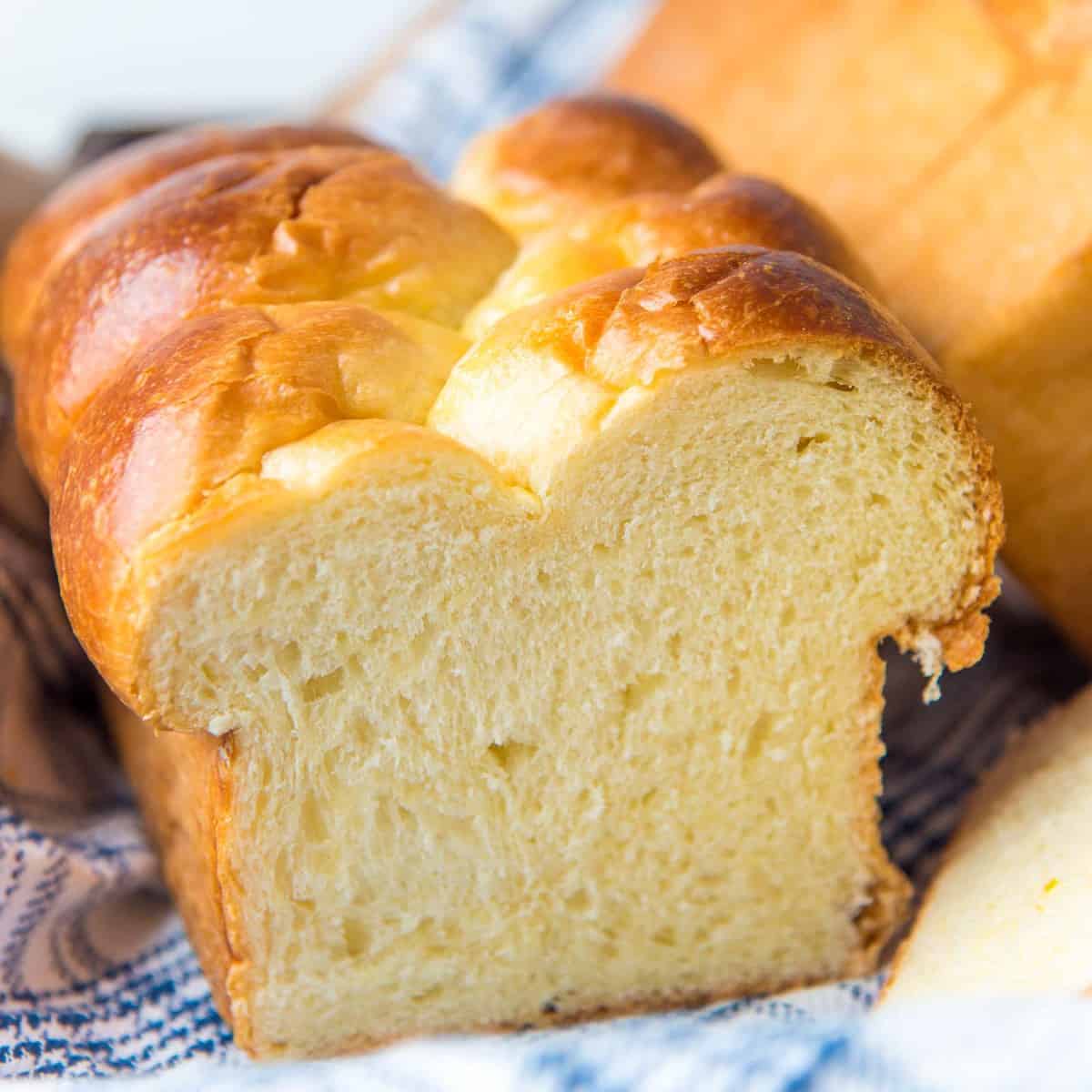
Classic Brioche Loaf, Gluten Free
A tall, golden French loaf with a feathery, almost silky crumb and enough butter in it to make toast feel like dessert. The dough does its real work overnight in the fridge, so the hands-on part is short and the payoff is huge.
Ingredients
Makes 1 loaf (about 12 slices)
Dough
Egg Wash
Instructions
- 1
Make the psyllium gel
Whisk the psyllium husk powder into the lukewarm water and milk in a small bowl and keep whisking for about 20 seconds so it does not clump. Let it sit 5 to 10 minutes, until it thickens to the consistency of loose jelly. This gel is doing the job gluten would: holding gas bubbles and keeping the crumb from crumbling.
- 2
Mix the dough
In the bowl of a stand mixer fitted with the paddle, not the dough hook, whisk together the gluten-free flour blend, xanthan gum, sugar, yeast, and salt. Add the eggs and the psyllium gel and beat on medium for 4 minutes, scraping the bowl twice. You are aiming for a thick, smooth, sticky batter rather than a kneadable dough, and no amount of extra mixing will change that.
- 3
Beat in the butter
With the mixer on low, add the softened butter in 4 or 5 additions, letting each one blend in before the next. Then beat on medium for 3 minutes more, until the mixture is uniform, glossy, and the color of pale custard.
- 4
Rest to hydrate the starches
Cover the bowl and leave it at room temperature for 30 minutes. Gluten-free flours absorb liquid slowly, and this rest is what turns a slack, gritty batter into something thick and scoopable. It also keeps the baked loaf from tasting sandy. Skip the overnight chill used for wheat brioche; there is no gluten here that needs the time, and cold only stalls the yeast.
- 5
Fill the pan
Butter a 9 x 5-inch metal loaf pan. Scrape the batter in and smooth the top with a wet spatula or wet fingertips, doming it slightly toward the center. For the look of a traditional four-ball loaf, press shallow grooves across the surface with the side of an oiled spatula.
- 6
Proof once
Cover loosely and proof in a warm spot for 60 to 90 minutes, until the dough has risen about 1/2 inch above the rim of the pan. Do not push it further. Gluten-free dough has no elastic network to hold it, so an overproofed loaf collapses in the oven. The surface should look domed and slightly bubbly.
- 7
Egg wash and bake
Heat the oven to 375°F (190°C) with a rack in the lower third. Beat the egg with the milk and brush a thin coat over the top. Bake 40 to 50 minutes, tenting with foil at about 20 minutes once the crust is well browned. Gluten-free loaves need to go hotter inside than wheat ones to set the starches, so bake until an instant-read thermometer in the center reads 205°F (96°C).
- 8
Cool completely, no exceptions
Rest the loaf in the pan for 10 minutes, then turn it out onto a rack and leave it for at least 3 hours. The crumb of a gluten-free bread finishes setting as it cools, and slicing early gives you a gummy center every time.
You did it! Help us bring baking back home by selling your delicious baked goods on Homebaked!
Baker's Tips
- 1.
Butter temperature is the whole game. It should be pliable enough to dent with a finger but still cool, around 65°F. Cold butter tears the dough apart; soft, oily butter greases it and the loaf bakes up heavy.
- 2.
If the dough climbs the hook or the bowl warms up noticeably during mixing, stop and chill everything for 15 minutes, then carry on. Brioche dough that gets above about 78°F starts leaking butter.
- 3.
Weigh the four dough pieces. Evenly sized balls rise at the same rate and give you that classic even-humped top instead of a lopsided loaf.
- 4.
Underproofing is the most common reason a home brioche comes out dense. Watch the dough, not the clock, and wait for that inch of rise above the pan rim.
- 5.
Day-old brioche is the best French toast and bread pudding base there is, so plan on it rather than mourning it.