Classic Brioche Loaf
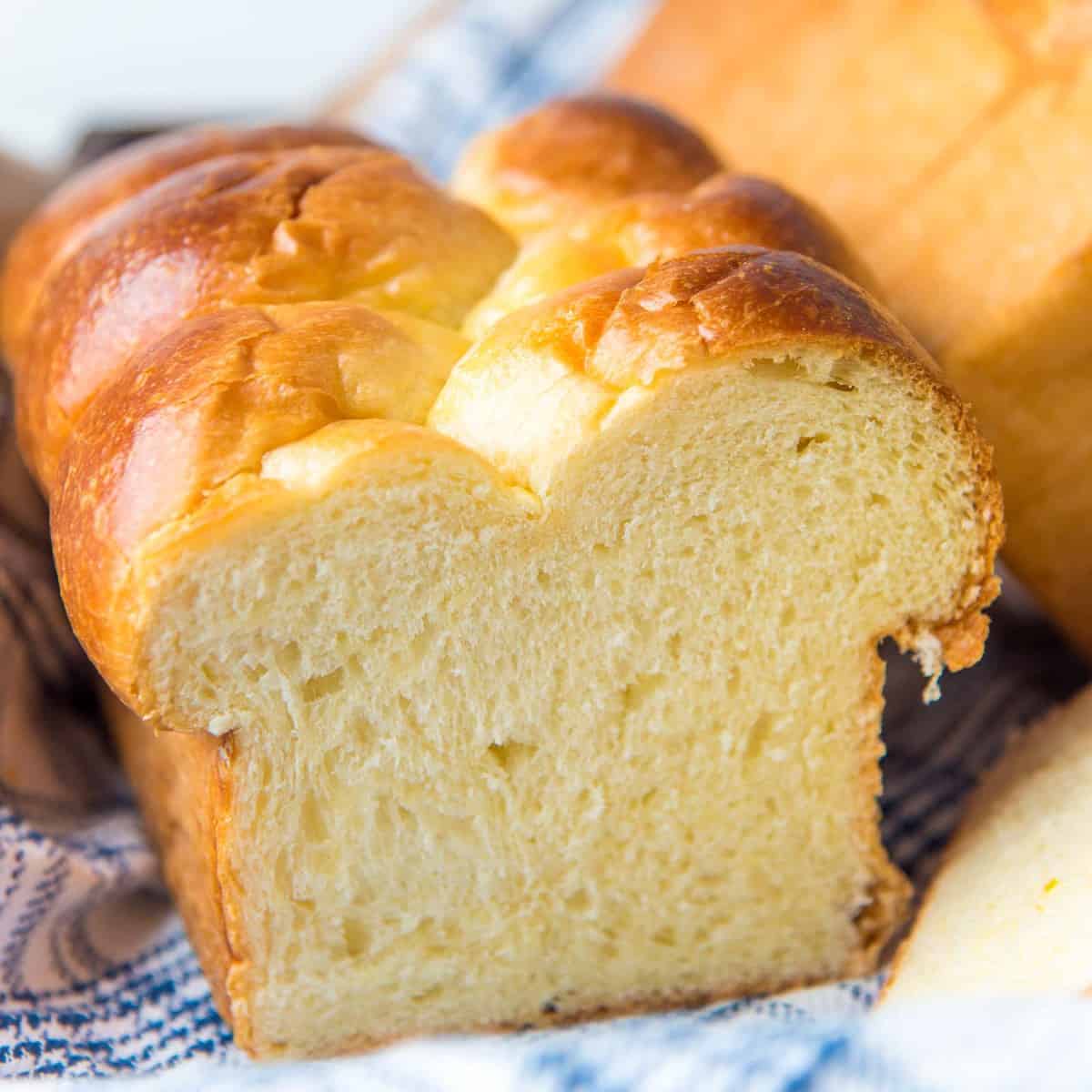
A tall, golden French loaf with a feathery, almost silky crumb and enough butter in it to make toast feel like dessert. The dough does its real work overnight in the fridge, so the hands-on part is short and the payoff is huge.
Ingredients
Makes 1 loaf (about 12 slices)
Dough
Egg Wash
Instructions
- 1
Mix the dough
In the bowl of a stand mixer fitted with the dough hook, whisk together the flour, sugar, and yeast. Add the salt, then the eggs and lukewarm milk. Mix on low until no dry flour remains, about 2 minutes, stopping once to scrape the bowl. The dough will look shaggy and stiff at this point, which is exactly right.
- 2
Build the gluten before any butter goes in
Turn the mixer to medium-low and knead for 8 to 10 minutes, until the dough is smooth, elastic, and pulling cleanly away from the sides of the bowl. This stage matters: the gluten network has to be strong enough to carry a lot of fat later, and butter added too early will stop it from forming.
- 3
Work in the butter, a few cubes at a time
With the mixer on low, add the butter 2 or 3 cubes at a time, waiting until each addition disappears into the dough before adding more. Take 6 to 8 minutes over this. When all the butter is in, raise the speed to medium and beat another 5 minutes, until the dough is glossy, slack, and sticky enough to cling to the bowl but still gathers around the hook. A small piece stretched between your fingers should thin to a translucent film before it tears.
- 4
First rise
Scrape the dough into a lightly buttered bowl, cover, and let it rise at warm room temperature for 1 1/2 to 2 hours, until puffy and nearly doubled. It will not look as lively as a lean bread dough; all that fat slows the yeast down.
- 5
Deflate and chill overnight
Fold the dough over on itself a few times in the bowl to knock out the gas, cover tightly, and refrigerate for at least 8 hours and up to 24. Warm brioche dough is a greasy, unshapeable mess; cold brioche dough is firm and cooperative, and the long chill deepens the flavor considerably.
- 6
Shape straight from the fridge
Butter a 9 x 5-inch metal loaf pan. Turn the cold dough onto a lightly floured counter and divide it into 4 equal pieces, about 225 g each. Flatten each piece, fold the edges into the center, flip, and roll under a cupped hand into a tight ball. Set the balls seam side down in a row down the length of the pan.
- 7
Final proof
Cover loosely and let the loaf proof at warm room temperature for 2 1/2 to 3 1/2 hours. It is starting cold, so give it time. It is ready when the dough has crested about an inch above the rim of the pan and a fingertip pressed gently into the surface leaves a dent that fills back in slowly.
- 8
Egg wash and bake
Heat the oven to 375°F (190°C) with a rack in the lower third. Beat the egg with the milk and brush a thin, even coat over the loaf, letting none pool in the seams. Bake 35 to 40 minutes, tenting with foil once the top is deep mahogany, usually around 20 minutes. The loaf is done when an instant-read thermometer in the center reads 190°F (88°C).
- 9
Cool before you cut
Let the loaf sit in the pan for 10 minutes, then turn it out onto a rack. Give it at least 2 hours to cool completely. Cutting into warm brioche compresses the crumb and you lose the airy texture you worked for.
You did it! Help us bring baking back home by selling your delicious baked goods on Homebaked!
Baker's Tips
- 1.
Butter temperature is the whole game. It should be pliable enough to dent with a finger but still cool, around 65°F. Cold butter tears the dough apart; soft, oily butter greases it and the loaf bakes up heavy.
- 2.
If the dough climbs the hook or the bowl warms up noticeably during mixing, stop and chill everything for 15 minutes, then carry on. Brioche dough that gets above about 78°F starts leaking butter.
- 3.
Weigh the four dough pieces. Evenly sized balls rise at the same rate and give you that classic even-humped top instead of a lopsided loaf.
- 4.
Underproofing is the most common reason a home brioche comes out dense. Watch the dough, not the clock, and wait for that inch of rise above the pan rim.
- 5.
Day-old brioche is the best French toast and bread pudding base there is, so plan on it rather than mourning it.
Equipment
- Stand mixer with dough hook
- Digital kitchen scale
- 9 x 5-inch metal loaf pan
- Bench scraper
- Pastry brush
- Instant-read thermometer
- Wire cooling rack
Storage
Keep the cooled loaf wrapped in a bread bag or beeswax wrap at room temperature for up to 3 days; refrigeration dries it out fast. For longer storage, slice it first, then freeze in a zip-top bag for up to 3 months and toast slices straight from frozen. A whole loaf can be frozen wrapped in plastic and foil and thawed overnight on the counter.