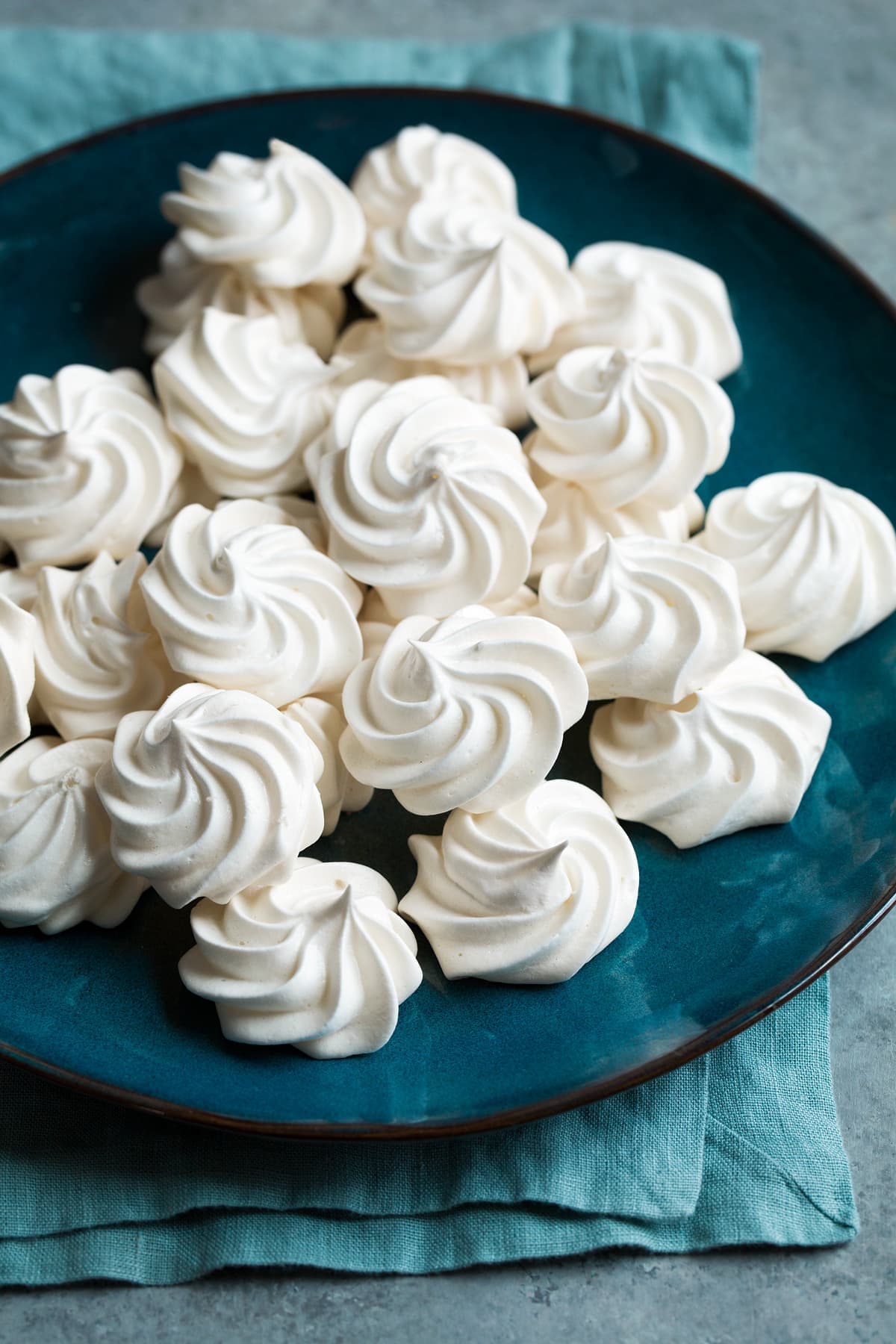
Classic Crisp Meringue Cookies
Three egg whites, a cup of sugar, and a very patient oven turn into a tray of weightless, shatter-crisp cookies. They look like something from a pastry case but cost about a dollar to make.
Ingredients
Makes 36 cookies
Meringue
Instructions
- 1
Set the oven low and line your pans
Heat the oven to 200°F with racks in the upper and lower thirds. Line two rimmed baking sheets with parchment. This is a drying temperature, not a baking temperature — you want the cookies to lose moisture slowly without ever taking on color.
- 2
Start with a spotless bowl
Wipe the mixer bowl and whisk with a paper towel dipped in white vinegar or lemon juice, then dry them. Any trace of fat — oil, butter, or a speck of yolk — will keep the whites from climbing. For the same reason, use metal or glass rather than plastic, which holds onto grease.
- 3
Separate the whites while cold, whip them warm
Cold eggs separate cleanly, so crack them straight from the fridge, dropping each white into a small cup before adding it to the bowl so one broken yolk can't ruin the batch. Then let the whites sit out for about 30 minutes — room-temperature whites whip to noticeably more volume.
- 4
Whip to soft peaks
Add the cream of tartar and salt to the whites and beat on medium speed until the mixture turns white, foamy, and holds a peak that flops over when you lift the whisk — about 2 minutes. Don't rush to high speed here; a slower start builds smaller, sturdier bubbles.
- 5
Add the sugar a spoonful at a time
With the mixer on medium-high, add the sugar one tablespoon at a time, waiting 15 to 20 seconds between additions and scraping the bowl once or twice. This takes a full 4 to 5 minutes and it is the step that decides whether your cookies are crisp or weepy — dumping the sugar in deflates the foam and leaves it undissolved.
- 6
Check for stiff, glossy peaks
Keep whipping until the meringue is thick, bright white, and holds a peak that stands straight up when the whisk is lifted. Rub a little between your fingers: it should feel smooth. If it's still gritty, whip another minute. Beat in the vanilla and food coloring on low just until streaked or uniform, whichever look you want.
- 7
Pipe or spoon onto the sheets
Transfer to a piping bag fitted with a large star tip and pipe 1 1/2-inch rosettes about an inch apart — they barely spread, so you can crowd them more than other cookies. No piping bag? Two spoons and a casual swoop look lovely. Dab a little meringue under each corner of the parchment first to glue it down.
- 8
Bake low and slow
Bake for 90 minutes, swapping and rotating the pans halfway through. They're done when they're dry to the touch, lift cleanly off the parchment, and sound hollow when you tap the bottom. They should stay pure white — if you see any beige, your oven runs hot, so prop the door with a wooden spoon.
- 9
Let them dry in the turned-off oven
Turn the oven off and leave the cookies inside with the door shut for at least an hour, or overnight if you can. This slow cooldown drives out the last of the moisture and prevents the cracking that comes from a sudden temperature drop. Cool completely before storing — a warm meringue will steam itself soft in a sealed container.
You did it! Help us bring baking back home by selling your delicious baked goods on Homebaked!
Baker's Tips
- 1.
Bake on a dry day if you possibly can. Meringue is essentially sugar foam, and sugar pulls water out of humid air, which turns crisp cookies tacky within hours. If it's raining, run the air conditioning or save the project for another afternoon.
- 2.
Superfine (caster) sugar dissolves faster than granulated and gives a slightly smoother meringue. You can make your own by pulsing granulated sugar in a food processor for 30 seconds, then measuring it after.
- 3.
Beads of syrup on the surface after baking mean the sugar never fully dissolved. Next time, add it more slowly and whip a minute or two longer before piping.
- 4.
For a cocoa version, sift 2 tablespoons of unsweetened cocoa over the finished meringue and fold it in with three or four strokes — stop while it's still streaky so you don't knock out the air.
- 5.
A clean, dry piping bag matters as much as a clean bowl. Residual grease from a previous frosting job will collapse the meringue as it passes through.
- 6.
Save the yolks for lemon curd, custard, or hollandaise; they keep covered in the fridge for about two days.
Equipment
- Stand mixer with whisk attachment, or hand mixer
- Metal or glass mixing bowl
- Two rimmed baking sheets
- Parchment paper
- Piping bag with large star tip
- Rubber spatula
- Oven thermometer
Storage
Store completely cooled meringues in an airtight container at room temperature for up to 2 weeks — add a packet of silica gel or a few grains of rice wrapped in a paper towel if your kitchen is humid. Never refrigerate them; the moisture will make them sticky overnight. They freeze well in a rigid airtight container for up to 2 months, and thaw crisp at room temperature in about 15 minutes. If they soften, re-crisp them in a 200°F oven for 15 to 20 minutes and cool completely.