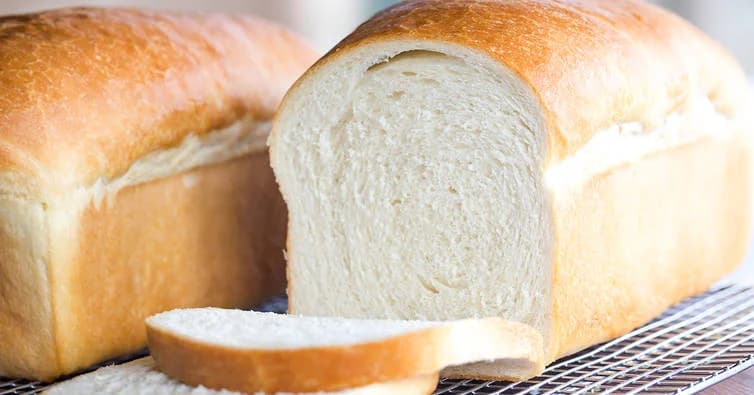
Soft White Sandwich Loaf, Gluten Free
A tall, tender white loaf with a feather-soft crumb and a thin buttered crust that slices cleanly for sandwiches and toast. One bowl, two rises, and no special equipment beyond a loaf pan.
Ingredients
Makes 1 loaf (about 14 slices)
Dough
Finish
Instructions
- 1
Wake up the yeast
Whisk the warm milk, honey, and yeast together in a measuring cup and let it stand 5 to 10 minutes, until foamy on top. Keep the milk under 115°F so the yeast survives. If the surface stays flat and smooth after 10 minutes, start again with fresh yeast.
- 2
Combine the dry ingredients
In a large bowl or stand mixer bowl, whisk together the gluten-free flour blend, xanthan gum, psyllium husk powder, and salt until evenly distributed. Check your flour bag first: many 1:1 blends already contain xanthan gum, and doubling up makes the loaf gummy, so leave it out if it's listed on the label.
- 3
Beat to a thick batter
Add the eggs, melted butter, vinegar, and the yeasted milk to the dry ingredients. Using a flat beater or hand mixer rather than a dough hook, beat on low until combined, then on medium for 3 full minutes. There is no gluten to develop, so this beating is what builds structure instead. You're looking for a thick, glossy batter closer to soft frosting than to bread dough, and it will stiffen as the psyllium hydrates.
- 4
Rest the batter
Cover the bowl and let the batter rest for 20 to 30 minutes at room temperature. The starches and psyllium need this time to absorb liquid fully, which is the difference between a loaf with a gritty, crumbly crumb and one that slices cleanly. The batter will visibly thicken and lose its wet sheen.
- 5
Fill the pan
Grease a 9x5-inch loaf pan well. Scrape the batter in and smooth the top with a wet spatula or damp fingers, pushing it into the corners. There's no shaping or rolling here, since this batter can't hold a shape, so your only job is an even, level surface.
- 6
One rise only
Cover loosely and let the loaf rise in a warm spot for 45 to 60 minutes, until the batter has risen to just about the rim of the pan. Heat the oven to 350°F partway through. Resist letting it rise higher than the rim, because gluten-free loaves have nothing to hold that extra structure and will sink in the middle during baking.
- 7
Bake
Bake for 45 to 55 minutes, until the top is deep brown and firm and an instant-read thermometer in the center reads 205 to 210°F. That higher target temperature is not a typo: gluten-free loaves need to climb well past the 190°F you'd use for wheat bread to finish gelatinizing their starches. Tent with foil at the 30-minute mark if the crust is darkening quickly.
- 8
Butter and cool completely
Brush the hot crust with melted butter, rest the loaf in the pan for 10 minutes, then turn it out onto a rack. Cool it all the way through, a minimum of 3 hours, before slicing. Gluten-free bread genuinely sets as it cools, and cutting it even slightly warm will give you a sticky, dense center that would have been perfectly good an hour later.
You did it! Help us bring baking back home by selling your delicious baked goods on Homebaked!
Baker's Tips
- 1.
Bread flour gives this loaf its chew and height, but all-purpose works too and produces a slightly softer, shorter loaf. Don't add extra flour beyond the recipe to fight stickiness during kneading, since that's the fastest route to a dry, dense crumb.
- 2.
An 8.5x4.5-inch pan will give you a noticeably taller loaf with a higher dome. Use the same dough weight and add about 5 minutes to the bake.
- 3.
For a classic supermarket-style square slice, bake in a lidded Pullman pan and slide the lid on once the dough reaches about an inch below the rim.
- 4.
Swapping one cup of the bread flour for whole wheat adds a nutty flavor; add an extra 2 tablespoons of milk to compensate for how thirsty whole wheat is.
- 5.
Two tablespoons of nonfat dry milk powder added with the flour will make the crumb softer and keep the loaf fresh an extra day.
- 6.
You can slow the first rise in the fridge overnight. Pull the dough out, let it warm up for an hour, then shape and proceed as written.