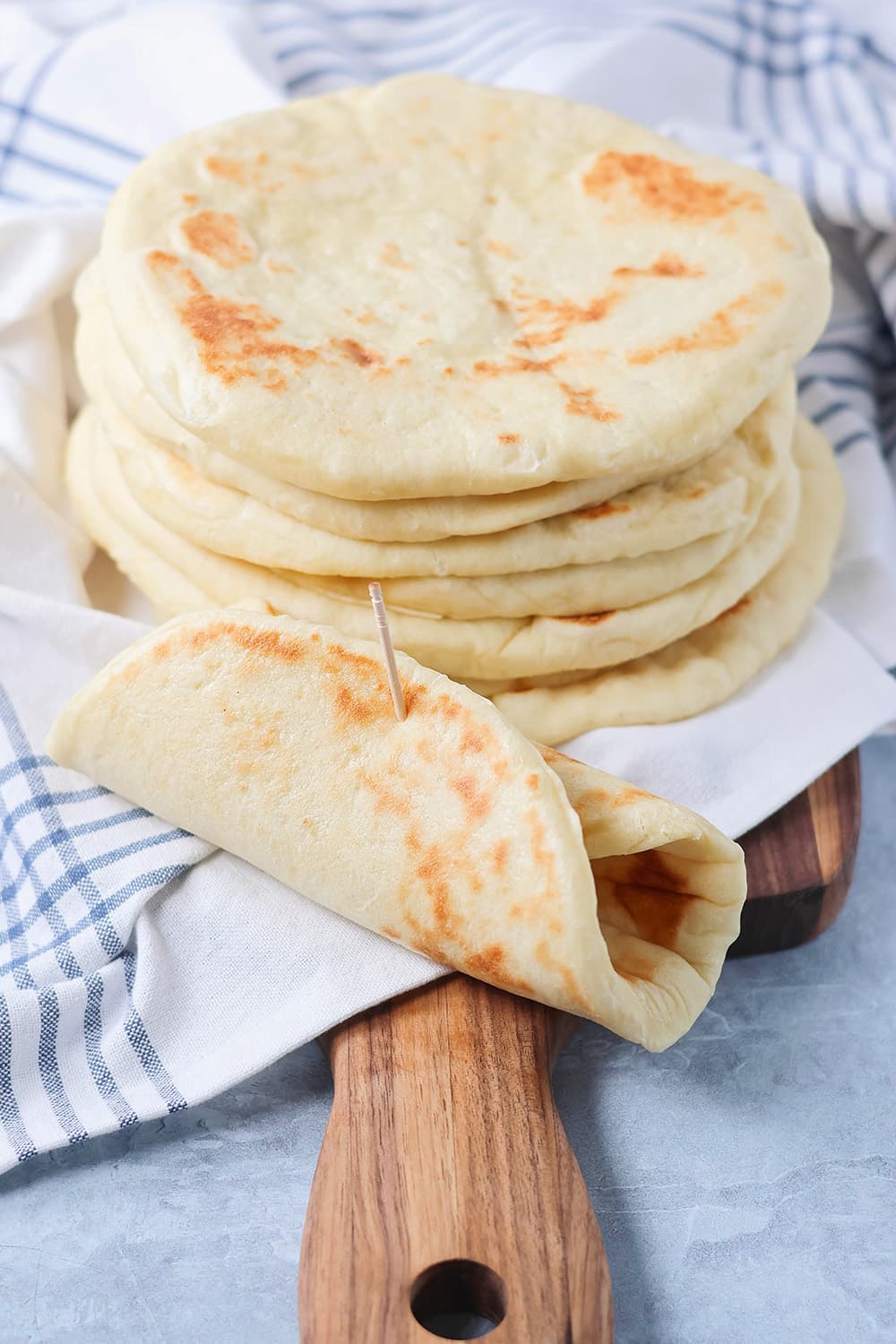
Soft Skillet Flatbread, Gluten Free
Pillowy, blistered flatbread that cooks on the stovetop in about two minutes a side, no yeast and no oven required. Greek yogurt does the heavy lifting, keeping every piece tender and foldable for days.
Ingredients
Makes 8 flatbreads
Dough
For Cooking and Finishing
Instructions
- 1
Whisk the dry ingredients
In a large bowl, whisk the gluten-free flour blend, xanthan gum, baking powder, salt, and sugar together for a good 15 seconds. Thorough whisking matters even more here — xanthan gum clumps instantly when it meets liquid, and any pockets left in the dry mix will turn into slimy lumps you can't stir out.
- 2
Mix in the wet ingredients
Add the yogurt, olive oil, and warm water. Stir until you have a cohesive, soft dough. It will be noticeably wetter and stickier than a wheat dough and it will not feel elastic — that's correct, so resist the urge to add flour to fix the texture now. It firms up considerably during the rest.
- 3
Bring the dough together
Work the dough against the side of the bowl with a spatula for about a minute, pressing and folding until it's uniform. There is no gluten to develop, so kneading on the counter does nothing useful and only adds flour that will dry the breads out. Gather it into a ball and leave it in the bowl.
- 4
Rest the dough to hydrate
Cover the bowl and rest the dough at room temperature for 30 minutes — don't shorten this one. Gluten-free starches absorb liquid slowly, and the rest is what takes the dough from sticky and loose to smooth and rollable. It also eliminates the gritty texture you get from under-hydrated rice flour.
- 5
Divide and roll between parchment
Divide the dough into 8 pieces, about 104 grams each, and roll into balls with lightly oiled hands. Roll each one out between two sheets of parchment to about 7 inches across and a scant 1/8 inch thick. Rolling between parchment instead of on a floured counter is the key move — extra dusting flour works into the surface and makes the baked bread dry and crumbly. Peel off the top sheet and use the bottom sheet to carry the round to the pan.
- 6
Heat the skillet
Set a cast iron or heavy nonstick skillet over medium-low heat and preheat for 3 to 4 minutes, then brush with a thin film of olive oil. Run these a touch cooler than wheat flatbreads: gluten-free dough colors faster and needs a little longer in the pan to cook through to the center.
- 7
Cook the flatbreads
Invert a round into the pan and peel away the parchment. Cook 2 to 2 1/2 minutes on the first side, until the underside shows golden-brown spots and the top looks dry and set rather than tacky, then flip and cook another 1 1/2 to 2 minutes. These puff less dramatically than wheat flatbreads — look for a matte, dry surface and firm edges rather than a big balloon. A gummy center means they came out too early, so err on the longer side.
- 8
Stack and steam
Stack the finished breads on a plate and cover tightly with a clean kitchen towel right away. This step is essential for gluten-free flatbread: the trapped steam is what makes them flexible enough to fold without cracking. Give the stack at least 5 minutes under the towel, then brush with melted butter, add flaky salt, and serve warm.
You did it! Help us bring baking back home by selling your delicious baked goods on Homebaked!
Baker's Tips
- 1.
Full-fat Greek yogurt gives the best result. Thinner regular yogurt works but you'll need an extra 2 to 3 tablespoons of flour to compensate for the added liquid.
- 2.
Roll out all eight rounds before you start cooking, stacking them with squares of parchment between. Once the pan is hot the breads go fast and you won't have time to roll between batches.
- 3.
If the breads puff into a full balloon, that's a good sign — it means the surface sealed and steam built up inside. Press gently with a spatula to flatten before flipping.
- 4.
For garlic flatbread, warm two smashed cloves in the melted butter for a few minutes, then discard the garlic and brush the infused butter on. Chopped parsley, za'atar, or cracked black pepper all work scattered over the top.
- 5.
The dough can be made a day ahead and refrigerated. Let it sit out for 30 minutes before rolling, or it will resist stretching.
- 6.
These make an excellent fast pizza base. Cook one side fully, flip, top the cooked side, and cover the pan for 3 minutes to melt the cheese.